
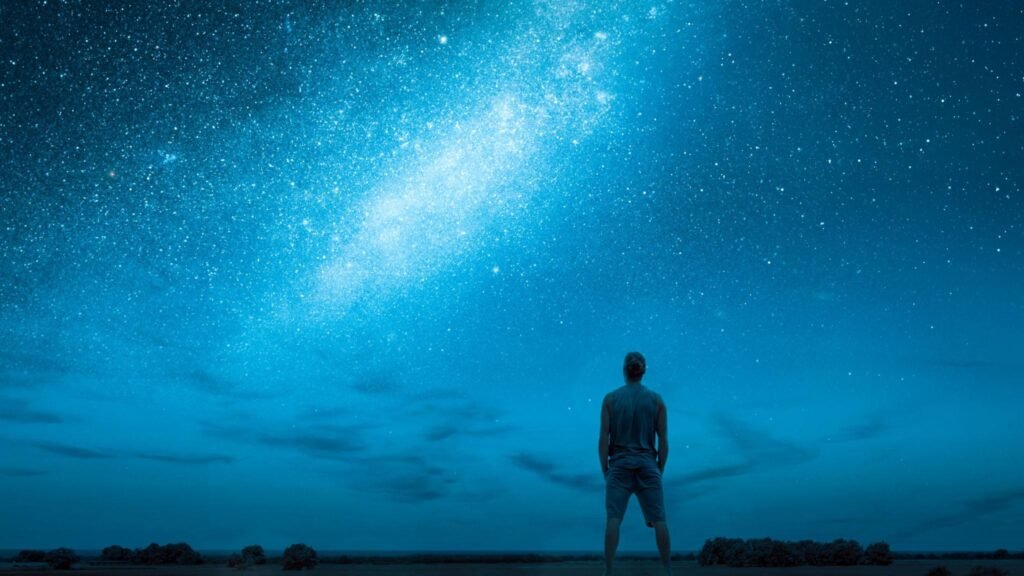
“The meaning of life is just to be alive.
It is so plain and so obvious and so simple.
And yet, everybody rushes around in a great panic as if it were necessary to achieve something beyond themselves.” — Alan Watts
And perhaps that is the tragedy of being human.
We know how to live, but we do not always know how to feel alive. So, we keep searching.Through careers, relationships, religion, books, heartbreak, ambition, healing, success, spirituality, and sometimes even suffering. Somewhere deep inside, every human being wants reassurance that their existence matters. Don’t we?
Most of us would never openly admit it, right? But beneath all the routines, responsibilities, and distractions, we humans carry quiet questions within ourselves:“Am I living the right way?”
“What truly matters?”
“Why do I still feel empty sometimes?”
“What is the point of all this?”
And maybe that is what makes humans different from every other living creature.Birds migrate without questioning their purpose. Trees continue growing without wondering whether they are successful enough. Animals survive through instinct. But humans pause in the middle of life itself and ask why they exist at all.
That single question- What makes life meaningful?has created philosophy, spirituality, psychology, religion, poetry, and some of the greatest art humanity has ever known.
Humans Are Aware of Their Own Existence

One of the biggest reasons humans search for meaning is that humans are deeply self-aware creatures. We know we are alive. More importantly, we know that one day we will not be there.That awareness changes everything.
Human beings understand time in a way that is emotionally overwhelming. We remember the past, worry about the future, and constantly think about how quickly life is moving. We know people grow old. We know relationships change. We know nothing stays forever.And perhaps that is why humans search for something permanent in a temporary world.
Some people look for meaning through religion. Some through success. Others through love, creativity, family, spirituality, or helping people. The forms may be different, but the emotional need is often the same: humans want to feel that their lives matter.Psychologists have often connected this search for meaning to the awareness of mortality. According to a psychological theory called Terror Management Theory, much of human behaviour is influenced by the fear of death and the desire to create purpose beyond it.
In simple words, humans search for meaning because living without meaning feels emotionally frightening
Pain Often Makes People Question Life

Interestingly, most people do not begin searching for meaning during happy moments.
They begin after pain.After heartbreak. After losing someone. After loneliness. After failure. After realising life is not unfolding the way they imagined.
Pain has a strange way of waking people up emotionally.A person may spend years living mechanically, following routines without questioning anything. But suffering interrupts that pattern. Suddenly, the mind begins asking difficult questions.
“Why did this happen?”
“What am I supposed to learn from this?”
“Will any of this ever make sense?”
And perhaps that is because meaningless suffering feels unbearable to the human heart.Humans constantly try to turn pain into something meaningful. A heartbreak becomes poetry. Grief becomes wisdom. Trauma becomes empathy. Loneliness becomes art.
Psychologists even use the term “meaning-making” to explain how humans emotionally process difficult experiences. People naturally try to create understanding from painful situations because it helps them survive emotionally.That is why phrases like “everything happens for a reason” feel comforting to many people. Whether scientifically true or not, they give suffering a direction.
And maybe humans need that direction.
Humans Want Life to Feel Bigger Than Routine
Modern life often feels repetitive. We wake up, work, and reply to messages. Pay bills. Sleep. Repeat.And somewhere between all of this, many people quietly begin wondering whether life is supposed to feel more meaningful than this. That feeling is more common than people admit.Humans are not satisfied with simply surviving. They want emotional depth. They want purpose. They want experiences that make them feel connected to something larger than daily routine.
That is why people travel to “find themselves.” That is why people suddenly leave successful careers to pursue passion. That is why some people move toward spirituality after years of chasing material success.Because achievement alone does not always create meaning.
A person can have money, status, and success, yet still feel emotionally empty inside.
And perhaps that emptiness comes from a very human desire: the desire to feel deeply connected to life itself.
Philosophy Has Tried to Answer This for Centuries

Long before self-help books and motivational podcasts existed, philosophers were already trying to understand why humans search for meaning.
Philosophers like Socrates believed that questioning life was essential. According to him, simply existing without understanding oneself was incomplete.Then came philosophers like Albert Camus, who explored a much darker possibility: what if life itself has no built-in meaning?
At first, that idea sounds depressing. But Camus believed something surprisingly hopeful. He believed that if the universe does not provide meaning automatically, humans are free to create meaning themselves.And perhaps that is exactly what people do every day.
Some people create meaning through love. Others through raising children, creating art, building businesses, helping others, healing emotionally, or simply surviving difficult phases of life.Maybe the meaning is not hidden somewhere far away.
Maybe humans slowly create it through the way they choose to live.
Religion and Spirituality Give Comfort
For centuries, religion has helped humans answer emotional questions about existence.Questions like:
Why are we here?
Why do people suffer?
What happens after death?
What makes a good life?
Almost every religion offers humans one powerful reassurance:Your life matters.
In Hindu Philosophy, life is often viewed as a spiritual journey where the soul learns and evolves through experiences.
In Buddhism, meaning comes through awareness, compassion, and inner peace.
In Christianity and Islam, meaning is deeply connected to faith, morality, devotion, and serving others.Even people who are not religious often search spiritually through meditation, mindfulness, nature, journaling, healing practices, or self-discovery.
Perhaps humans naturally seek something larger than themselves because human life feels so temporary.People want reassurance that existence is not random.
Modern Life Has Made the Search More Difficult

Ironically, humans today have more freedom than any generation before them. Yet many people feel more emotionally lost than ever.
Perhaps because modern life constantly pressures people to prove that their lives are meaningful.Social media has made this even more intense. Every day, people see others appearing happier, richer, more successful, more attractive, more fulfilled, and more confident. Slowly, life begins feeling like a competition instead of an experience.
And as a result, many people quietly start feeling as though they are falling behind in life, even when they do not know what they are chasing.Researchers and psychologists have often discussed this modern “meaning crisis,” where many people feel disconnected from traditional sources of belonging like family structures, religion, stable communities, and long-term emotional connections.
Humans today are not only searching for happiness.They are searching for significance.
Love Gives Life Meaning

Perhaps the deepest source of meaning for humans is love.
Not only romantic love, but connection itself.Friendship. Family. Care. Belonging. Feeling understood.
At the end of life, people rarely remember ordinary workdays or social media achievements. They remember moments.Someone staying beside them during difficult years. A parent sacrificing quietly. Friends laughing uncontrollably late at night. Conversations that made them feel seen and understood.
Humans are emotional beings. They do not simply want success. They want a connection.And perhaps that is why loneliness affects people so deeply. Research has repeatedly shown that social connection strongly influences emotional well-being and a person’s sense of purpose in life.
Maybe humans search for meaning because they do not want to feel alone in existence.And love briefly makes life feel less lonely.
Maybe Meaning Changes Throughout Life
One beautiful thing about meaning is that it changes as humans change.At one stage of life, meaning may look like ambition. Later, it may look like peace.
A teenager may search for identity. An adult may search for stability. Someone older may search for inner calm and emotional fulfilment.People evolve emotionally throughout life, and so does their understanding of meaning.
Perhaps that is why there is no single answer that works for everyone.Each person slowly builds meaning through their own experiences, relationships, struggles, dreams, and growth.
Conclusion

“There are years that ask questions and years that answer.” — Zora Neale Hurston
Maybe humans search for meaning because we are emotional people who feel everything deeply. We love deeply, we lose deeply, and we keep hoping even after difficult times.Somewhere between happiness and heartbreak, people keep searching for something that makes life feel meaningful and worth living.
And maybe meaning is not one big answer waiting at the end of life. Maybe it is found in small everyday moments, such as in love, growth, healing, kindness, laughter, connection, art, and in finding the strength to keep going even when life feels uncertain.Perhaps this endless search for meaning is not a weakness. Perhaps it is one of the most beautiful parts of being human.
Contact Details:
Name – Preeti Yatan
Email – preetiyatan@gmail.com
LinkedIn – https://www.linkedin.com/in/preeti-yatan-382228245